

As computing power becomes a cornerstone of modern infrastructure, thermal management is evolving from an engineering concern into an industry bottleneck. AI optical modules are transitioning from 800G to 1.6T and 3.2T, with per-module power consumption doubling, driving a transition in thermal materials from alumina to higher-performance ceramic systems. The push for domestic substitution of electrostatic chucks (ESCs) in semiconductor equipment is equally pressing—mass production of 12-inch ESCs remains critically dependent on imports. These two parallel industry threads converge on one critical material: aluminum nitride (AlN).
A covalently bonded compound that is extremely rare in nature and requires industrial synthesis, AlN boasts a theoretical thermal conductivity of up to 320 W/(m·K)—five to ten times that of alumina. It also offers a volume resistivity exceeding 10¹⁴ Ω·cm and a coefficient of thermal expansion (4.5×10⁻⁶/°C) that closely matches semiconductor materials including silicon, SiC, and GaN. This combination of properties makes it nearly irreplaceable in power electronics, AI optical modules, and semiconductor equipment.
In practice, defects such as oxygen impurities and grain boundary phases limit the actual thermal conductivity of AlN Ceramic to the 170–230 W/(m·K) range. Commercial substrates are classified by thermal conductivity into grades from AlN-170 through AlN-230. AlN-170 accounts for approximately 89% of shipments, while AlN-230 represents the current benchmark for high-volume manufacturing (HVM).
Every stage of the AlN value chain presents significant technical barriers. AlN ceramic substrates are the core product. According to QYResearch, the global AlN substrate market was valued at approximately USD 138–170 million in 2024 and is projected to reach USD 213–277 million by 2031. The Asia-Pacific region accounts for 83.6% of consumption, with power modules representing the fastest-growing segment, accounting for roughly 32% of demand.
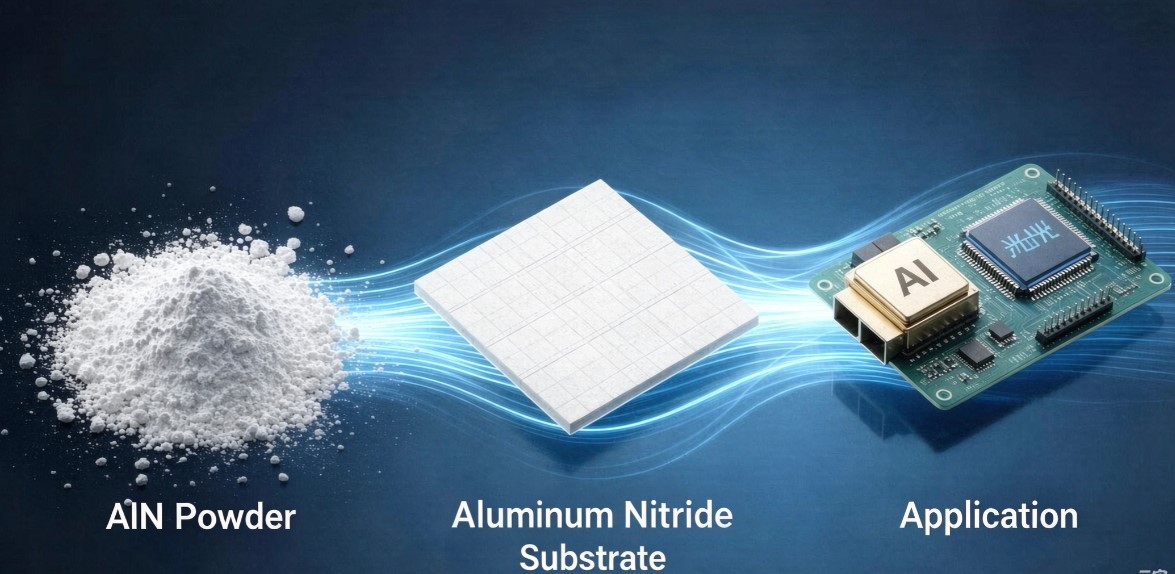
High Purity AlN Powder serves as the starting point of the supply chain. According to estimates from domestic securities firms, China's AlN powder demand reached approximately 5,600 tons in 2025, while domestic supply stood at only about 2,500 tons, leaving a gap of over 50%. Within this, the localization rate for High Purity AlN Powder for ESC—used in high-end substrates and ESCs—remains in the single digits. However, since 2026, domestic leaders have ramped up capacity expansion, with new AlN powder output coming online and supply capabilities improving rapidly.
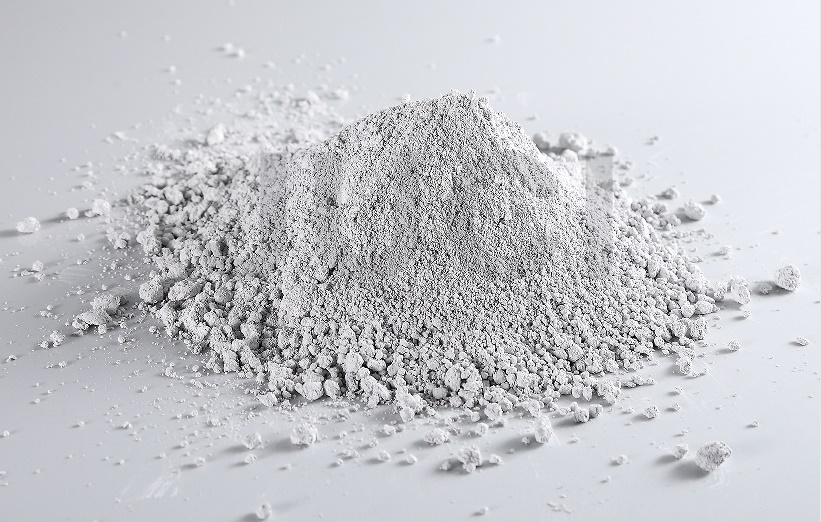
AlN Ceramic Heaters are critical components in semiconductor manufacturing equipment, with high-purity AlN powder accounting for approximately 40% of their material cost. In the areas of AlN ESC Materials and Semiconductor Grade AlN Chucks, mass production of 12-inch high-end ESCs remains almost entirely dependent on imports, leaving significant room for domestic substitution.
Sintering of AlN ceramics requires the addition of yttrium oxide (Y₂O₃) as a sintering aid, typically at approximately 3% by weight. China accounts for roughly 70% of global rare earth separation capacity and maintains a dominant position in high-purity yttrium oxide refining. Following the implementation of export licensing controls on medium and heavy rare earths in April 2025, overseas yttrium oxide prices surged from approximately USD 7.9/kg to as high as USD 372.5/kg—with some traders quoting even higher—extending overseas AlN delivery lead times from 1–2 months to 6–7 months.
Meanwhile, the ramp-up of AI optical modules in 2027 is expected to drive demand for high-end AlN powder to over 2,000 tons. The material qualification window is converging with the downstream demand surge: domestic AlN powder certification cycles are being compressed significantly, and the period from the second half of 2026 through 2027 coincides with the mass production ramp-up of 1.6T optical modules. This convergence defines the strategic imperative for aluminum nitride domestic substitution.
Xiamen Juci specializes in manufacturing High Purity AlN Powder, AlN Granule, Thermal Conductive Filler, and AlN Ceramics—products that have earned consistent recognition and positive feedback from customers worldwide. Should you have any requirements, please do not hesitate to contact us.
Contact: Jenny Qin / 진현혜
Phone: +86 151-5177-8700
Wechat ID: JENNY-8866
Xiamen Juci Technology Co., Ltd.
Email: qinxianhui@chinajuci.com
Website: www.jucialnglobal.com
WhatsApp : +8618250812806
WhatsApp : wechat: JENNY-8866
Email : chenxiaofang@chinajuci.com
Email : qinxianhui@chinajuci.com
Tel : +8618250812806
Tel : +8615151778700