
As electronic systems run ever "hotter," thermal management is no longer just a matter of lowering the temperature. Devices continue to evolve toward miniaturization and high power density, demanding solutions that simultaneously balance high heat conduction, electrical insulation, thermal cycling reliability, and long-term stable operation. Material selection has shifted from comparing isolated specifications to weighing comprehensive engineering trade-offs across the entire system.
Aluminum nitride (AlN) has entered high-end applications — power electronic packaging, optoelectronic devices, and semiconductor equipment — precisely because of its unique "high thermal conductivity + high electrical insulation" combination. The polycrystalline AlN ceramic obtained through forming and high-temperature sintering is defined by one core trait: it efficiently conducts heat while delivering excellent dielectric strength, and can also serve a structural support function. This is the fundamental reason it is used as a heat-dissipating substrate, in electronic packaging, and as components inside semiconductor process equipment. In the international market, aluminium nitride ceramic has become an established category of advanced thermal management materials, with numerous aluminum nitride suppliers building out complete product lines that span from powder to precision parts.
This becomes clearer when looking at a power module: the heat generated by the power chip must travel sequentially through the bonding layer, the metallized ceramic electronic substrate, the cooling baseplate, and the cooling system to be dissipated. Selecting AlN optimizes the thermal conduction of the ceramic layer, but the total system thermal resistance is jointly determined by ceramic thickness, interface layers, circuit structure, and the cooling scheme — a high material thermal conductivity does not automatically translate into a proportional drop in junction temperature. Commercial AlN substrates typically deliver a thermal conductivity of approximately 170 W/(m·K), while alumina and silicon nitride substrates coexist in the power packaging market. This fully demonstrates that no single "optimal" material can be decided on thermal conductivity alone; every choice serves the overarching system design target.
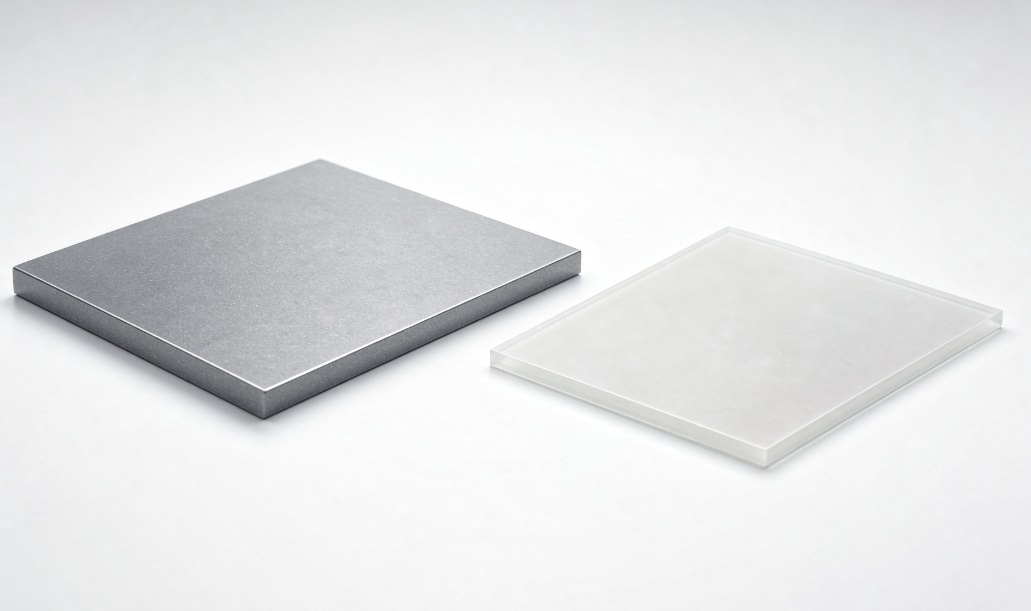
Looking at the upstream of the supply chain, everything starts with high-purity AlN powder. Powder purity, particle size, and oxygen content determine the performance ceiling of the sintered ceramic — which is exactly what downstream customers scrutinize most when evaluating aluminum nitride powder suppliers. Broadening the perspective to composite materials, AlN powder can also serve as thermal management ceramic fillers, entering markets such as thermal gels and potting compounds in an entirely different form — a track worthy of its own dedicated discussion. Meanwhile, inside semiconductor equipment, components such as the aluminum nitride heater for semiconductor manufacturingare extending the material value of AlN into even more demanding operating conditions.
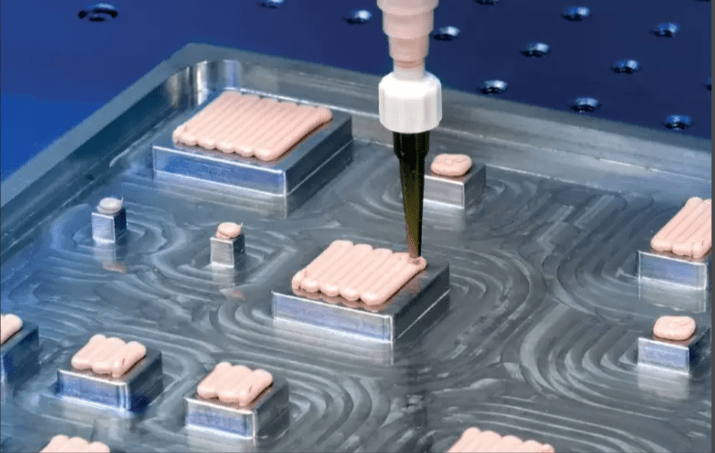
Xiamen Juci manufactures high purity AlN powder , AlN granule, thermal conductive filler and AlN ceramics . Please contact us if you have any requirements.
Contact: Jenny Qin / 진현혜
Phone: +86 151-5177-8700
Wechat ID: JENNY-8866
Xiamen Juci Technology Co., Ltd.
Email: qinxianhui@chinajuci.com
Website: www.jucialnglobal.com
WhatsApp : +8618250812806
WhatsApp : wechat: JENNY-8866
Email : chenxiaofang@chinajuci.com
Email : qinxianhui@chinajuci.com
Tel : +8618250812806
Tel : +8615151778700