
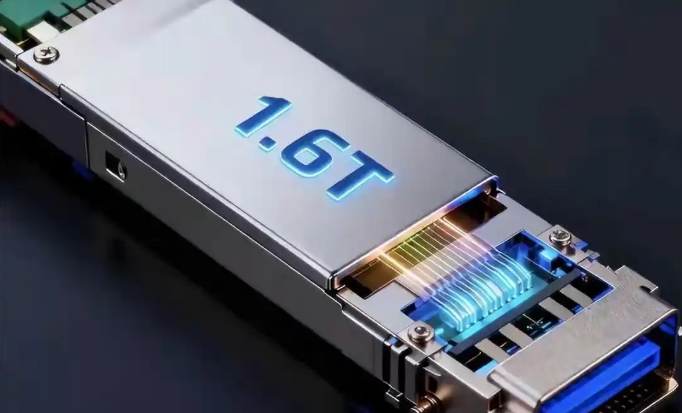
As the industry migrates from 800G to 1.6T and 3.2T optical modules, single-channel power consumption, optical engine integration density, and package-level heat flux are rising significantly. Industry data indicate that China's optical-module ceramic-component market is expected to reach approximately RMB 13.5 billion in 2026, with ceramic electronic substrates accounting for roughly RMB 9.9 billion. Driven by the volume ramp of 1.6T and 3.2T solutions, the market is expected to approach RMB 20 billion in 2027 and potentially reach RMB 22 billion by 2028.

It is important to clarify that aluminium nitride ceramic is not a universal material that "conducts heat better than metals." Pure copper offers a thermal conductivity of approximately 398 W/m·K, whereas high-purity AlN ceramics typically range from 170 to 230 W/m·K. The core value of AlN lies in its ability to provide superior performance in scenarios requiring a combination of electrical insulation, high thermal conductivity, low dielectric loss, and a Coefficient of Thermal Expansion (CTE) that falls within the matching window of Si, SiC, and GaN.
In high-power 1.6T units, the AlN content and value per module are significantly higher than in 800G designs. For upstream material suppliers, the particle size distribution (D50), oxygen content, metallic impurities, and surface treatment of AlN powder directly determine tape casting yield and metallization adhesion. Consequently, batch-to-batch consistency from aluminum nitride powder suppliers is often more critical than unit pricing.
In post-synthesis processing and high-purity material handling, high-purity aluminum nitride (AlN) crucibles or AlN liners can be utilized during annealing, purification, and decontamination steps conducted in controlled N₂ or Ar atmospheres to mitigate the risk of metallic contamination from Fe, Ni, Cr, and other impurities. However, when decarburization or carbon-removal steps are involved, the process window regarding oxygen partial pressure and AlN’s susceptibility to oxidation and hydrolysis must be carefully evaluated.
Regarding the supply chain, the high purity aluminum nitride granules market is evolving towards a model of "established high-purity sources plus qualified second-source suppliers." For optical module manufacturers, qualification cycles and long-term reliability often outweigh unit cost considerations, making the choice of aluminum nitride suppliers a strategic decision.
In conclusion, AlN's role in optical modules is not merely to replace metal heat sinks, but to integrate thermal management, electrical insulation, and high-frequency signal integrity into a single high thermal conductivity AlN substrate.
Xiamen Juci specializes in manufacturing High Purity AlN Powder, AlN Granule, Thermal Conductive Filler, and AlN Ceramics—products that have earned consistent recognition and positive feedback from customers worldwide. Should you have any requirements, please do not hesitate to contact us.
Contact: Jenny Qin / 진현혜
Phone: +86 151-5177-8700
Wechat ID: JENNY-8866
Xiamen Juci Technology Co., Ltd.
Email: qinxianhui@chinajuci.com
Website: www.jucialnglobal.com
WhatsApp : +8618250812806
WhatsApp : wechat: JENNY-8866
Email : chenxiaofang@chinajuci.com
Email : qinxianhui@chinajuci.com
Tel : +8618250812806
Tel : +8615151778700