
As SiC modules in new energy vehicles and GPUs in AI servers push past the kilowatt threshold, conventional alumina fillers (20–30 W/(m·K)) are no longer sufficient to manage today's extreme heat fluxes. The industry is in urgent need of a material capable of bridging this performance gap.
This is exactly where aluminum nitride thermal filler powder comes into play.
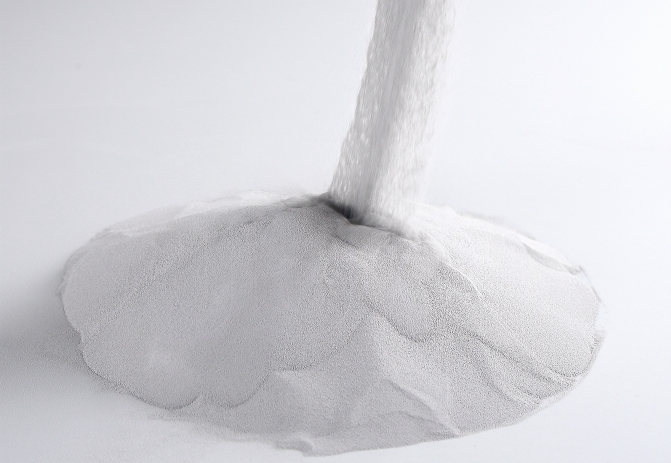
The intrinsic thermal conductivity of aluminum nitride micron powder ranges from 170 to 320 W/(m·K)—up to eight times higher than that of alumina. That said, it is important to distinguish between intrinsic material properties and real-world TIM performance. In practice, the effective thermal conductivity of a thermal interface material (TIM) depends on multiple factors—polymer matrix selection, filler loading, interfacial resistance, and processing conditions—and typically tops out in the single-digit to low-teens W/(m·K) range, well below AlN's intrinsic value. Nevertheless, under equivalent formulations, aluminum nitride thermal interface materials consistently outperform their alumina-based counterparts.
Beyond thermal performance, high-purity aluminum nitride powder delivers excellent electrical insulation (volume resistivity on the order of 10¹⁴ Ω·cm), making it well suited for high-voltage applications such as EV powertrains and PV inverters, where both thermal dissipation and dielectric integrity are critical.
Perhaps most importantly, the coefficient of thermal expansion (CTE) of aluminum nitride micron powder (~4.3×10⁻⁶/K) closely aligns with that of silicon (~3.5–4.0×10⁻⁶/K)—a far better match than alumina (~7.0×10⁻⁶/K). This CTE alignment minimizes thermomechanical stress during power cycling, reducing the risk of TIM cracking, delamination, or pump-out, thereby extending device lifetime. It is precisely this advantage that makes aluminum nitride filler for power module TIM indispensable in automotive-grade power modules.
For applications requiring even higher filler loading and better flowability, spherical aluminum nitride filler offers distinct advantages: its spherical morphology reduces viscosity at high loadings, enabling denser packing and more efficient thermal pathways in the TIM matrix.
In short, the combination of high thermal conductivity, robust electrical insulation, and near-perfect CTE matching constitutes the core value proposition of aluminum nitride thermal filler powder. Rather than displacing alumina across the board, AlN is carving out a position at the high-end, reliability-critical segments of the market—new energy vehicles, AI infrastructure, and grid-scale energy storage.
Xiamen Juci specializes in manufacturing High Purity AlN Powder, AlN Granule, Thermal Conductive Filler, and AlN Ceramics—products that have earned consistent recognition and positive feedback from customers worldwide. Should you have any requirements, please do not hesitate to contact us.
Contact: Jenny Qin / 진현혜
Phone: +86 151-5177-8700
Wechat ID: JENNY-8866
Xiamen Juci Technology Co., Ltd.
Email: qinxianhui@chinajuci.com
Website: www.jucialnglobal.com
WhatsApp : +8618250812806
WhatsApp : wechat: JENNY-8866
Email : chenxiaofang@chinajuci.com
Email : qinxianhui@chinajuci.com
Tel : +8618250812806
Tel : +8615151778700